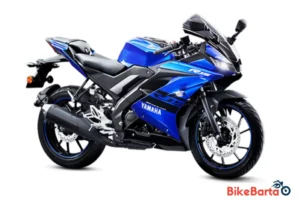
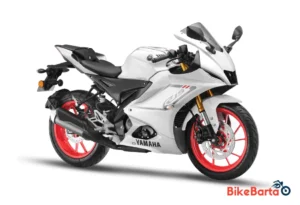
Yamaha R15 V3 vs Yamaha R15 V4 – Side by Side Comparison
For years, the Yamaha R15 has been one of the most desirable entry-level sports bikes in Bangladesh. Whether you’re a university student dreaming of your first fully-faired motorcycle, a daily commuter wanting sporty performance, or a weekend rider planning highway tours, the R15 has consistently remained at the top of many buyers’ wish lists.
The comparison between the Yamaha R15 V3 and Yamaha R15 V4 is especially common because both motorcycles continue to coexist in the Bangladeshi market. The V3 earned an excellent reputation through its balance of performance, reliability, and value, while the V4 builds upon that foundation with updated styling, premium suspension, and modern electronics inspired by Yamaha’s larger supersport motorcycles.
If you’re also considering alternatives, bikes like the Suzuki GSX-R150, Honda CBR150R, Honda CBR150R Repsol, GPX Demon GR165R, and KTM RC 125 are worth exploring depending on your riding style and budget. However, this guide focuses on helping you understand what truly separates the two generations of Yamaha’s popular R15 beyond the specification table above.
Price Comparison
The most noticeable difference between these two motorcycles is the purchase price.
With an official Bangladesh price of approximately ৳525,000, the Yamaha R15 V3 remains one of the best-value premium sports motorcycles in its category. It delivers nearly everything enthusiasts expect from Yamaha’s famous R-series without demanding the highest investment.
The Yamaha R15 V4, priced around ৳605,000, commands a noticeable premium. Naturally, many buyers question whether the additional investment is justified.
The answer depends largely on your expectations.
If your priority is owning an R15 with excellent performance while keeping your budget under control, the V3 remains highly attractive. On the other hand, riders looking for Yamaha’s latest styling, improved chassis feel, and more advanced rider-focused technologies may find the higher price of the V4 worthwhile.
The difference becomes easier to justify for buyers planning to keep the motorcycle for several years, where the updated features can contribute to greater long-term satisfaction.
Engine Performance and Real-World Riding Experience
One of the biggest surprises for many buyers is that the newer model is not necessarily more powerful on paper.
Both motorcycles use Yamaha’s respected 155cc liquid-cooled, fuel-injected engine featuring Variable Valve Actuation (VVA). This engine has built an excellent reputation in Bangladesh for combining everyday usability with exciting high-RPM performance.
Although the specification sheet shows the R15 V3 producing slightly higher peak power and torque figures, the difference is almost impossible to notice during normal riding. Instead, the R15 V4 focuses on delivering smoother throttle response and stronger acceleration in practical riding situations.
The updated engine mapping allows the V4 to feel more refined during city traffic while remaining eager once the engine enters the VVA range. Riders upgrading from commuter motorcycles will find either version significantly more responsive than typical 150cc alternatives.
Highway overtaking remains one of the strongest characteristics of both motorcycles. Their ability to comfortably cruise while maintaining confidence during overtakes continues to make the R15 one of Bangladesh’s most enjoyable small-capacity sports bikes.
Ride Quality and Suspension
This is arguably where the biggest practical difference exists.
The Yamaha R15 V3 uses conventional telescopic front forks, which already provide good balance between comfort and sporty handling. They absorb uneven roads reasonably well while remaining stable during enthusiastic cornering.
The Yamaha R15 V4 upgrades to premium Upside Down (USD) front forks, one of its most significant improvements.
On smooth roads and twisty sections, the USD suspension gives the motorcycle a noticeably more planted front end. Steering feels sharper, braking stability improves, and rider confidence increases during aggressive riding.
Bangladesh’s roads, however, present mixed conditions. During daily commuting, potholes and broken pavement can reduce the practical advantage of USD forks, meaning casual riders may not experience dramatic differences every day.
Enthusiasts who frequently enjoy spirited riding or weekend highway trips will appreciate the added precision offered by the V4’s suspension setup.
Handling, Cornering and Rider Confidence
Both motorcycles are built around lightweight chassis designs that prioritize agility over outright comfort.
The familiar R15 riding position remains aggressive compared to naked motorcycles, encouraging riders to lean forward for improved aerodynamic efficiency and better control through corners.
The V3 already handles exceptionally well, making it one of the benchmark motorcycles in the segment.
The V4 refines that experience further.
Combined with the USD forks and revised suspension setup, the V4 feels slightly more stable while entering corners and inspires greater confidence when changing direction at higher speeds.
New riders may not immediately notice the difference, but experienced riders are more likely to appreciate the improved front-end feedback.
Braking and Safety Features
Safety has always been one of Yamaha’s strengths in this category.
Both motorcycles feature Dual Channel ABS, front and rear disc brakes, and predictable braking performance.
Neither motorcycle suffers from the overly aggressive brake feel sometimes found on entry-level sports bikes. Instead, braking remains progressive, allowing riders to modulate stopping power confidently during emergency situations.
The V4 further enhances rider confidence through its improved chassis balance and additional electronic refinements available on certain variants, making the overall riding experience feel more modern.
Comfort and Everyday Practicality
Despite their sporty appearance, both R15 models are surprisingly usable for daily commuting.
Seat height, fuel tank capacity, and overall ergonomics remain nearly identical, meaning riders familiar with one model will instantly feel comfortable on the other.
City commuting is manageable once riders become accustomed to the committed riding position. However, those frequently carrying passengers should understand that both motorcycles prioritize sportiness over pillion comfort.
For weekend rides, the aerodynamic fairing offers useful wind protection compared to naked motorcycles in the same displacement class.
If daily comfort is your highest priority, alternatives like the Yamaha MT-15, Suzuki Gixxer SF 150, or Honda CB150X may deserve consideration.
Fuel Efficiency and Maintenance Costs
Fuel economy remains one of the biggest advantages of Yamaha’s VVA engine.
Both motorcycles officially deliver around 45 km/L, while owners commonly experience approximately 42 km/L depending on riding style, traffic conditions, and maintenance.
Routine servicing costs remain similar because both motorcycles share the same engine platform and many common components.
Genuine Yamaha parts are widely available through authorized service centers across Bangladesh, helping owners maintain reliability over many years.
Like any high-performance engine, following recommended service intervals and using quality engine oil play an important role in preserving long-term performance.
Reliability, Resale Value and Ownership Experience
The R15 series has earned an outstanding reputation for reliability in Bangladesh.
Owners frequently praise both generations for dependable engines, durable build quality, and consistent long-term performance.
The R15 V3 benefits from years of proven ownership experience. Many examples have accumulated high mileage while remaining mechanically healthy with proper maintenance.
The R15 V4, meanwhile, combines the same dependable engine with newer styling that may remain visually fresh for a longer period.
Resale value is another area where Yamaha performs exceptionally well. Both motorcycles retain their market demand, although the V4 is likely to command stronger resale prices simply because it is the newer generation.
For buyers planning future resale, both remain among the safest investments in the premium 150cc sports bike category.
Which One Should You Buy?
The right choice depends less on specifications and more on your priorities.
Choose the Yamaha R15 V3 if you:
- Want the best value in Yamaha’s premium sports bike lineup.
- Prefer spending less without sacrificing exciting performance.
- Primarily ride in cities with occasional highway trips.
- Value proven reliability and strong resale.
Choose the Yamaha R15 V4 if you:
- Want Yamaha’s latest design and premium appearance.
- Appreciate USD front suspension and improved handling.
- Prefer updated electronics and refined riding dynamics.
- Plan to keep the motorcycle for many years.
Neither motorcycle is a wrong choice. Instead, the decision comes down to whether the V4’s premium upgrades justify the additional investment for your riding style.
Final Verdict
The Yamaha R15 V3 remains one of the smartest purchases in Bangladesh’s premium 150cc sports bike segment. It continues to deliver thrilling performance, excellent reliability, impressive fuel economy, and proven ownership satisfaction at a more accessible price.
The Yamaha R15 V4 takes that successful formula and refines it rather than reinventing it. The upgraded suspension, fresher styling, smoother riding experience, and additional technology make it the more complete motorcycle for enthusiasts willing to pay extra.
If budget is your biggest concern, the V3 offers outstanding value and very few compromises.
If you want the most modern R15 experience available in Bangladesh, the V4 is undoubtedly the better long-term choice.
Frequently Asked Questions
1. Is the Yamaha R15 V4 faster than the Yamaha R15 V3?
In real-world riding, the R15 V4 accelerates slightly quicker, although both motorcycles have a similar top speed and overall performance.
2. Which R15 offers better value for money?
The R15 V3 generally offers better value due to its lower purchase price while maintaining very similar overall performance.
3. Does the Yamaha R15 V4 have better suspension?
Yes. The V4 features USD front forks, providing improved front-end stability and cornering confidence compared to the V3.
4. Which motorcycle is better for beginners?
Both are beginner-friendly for riders moving into premium sports bikes, although the lower price of the V3 makes it a slightly easier first purchase.
5. Is fuel economy different between the two models?
No significant difference exists. Both typically deliver around 42–45 km/L under Bangladeshi riding conditions.
6. Which R15 is better for highway touring?
Both perform well on highways, but the R15 V4 offers a slightly more refined riding experience during longer journeys.
7. Do both motorcycles have Dual Channel ABS?
Yes. Both the Yamaha R15 V3 and Yamaha R15 V4 feature Dual Channel ABS for enhanced braking safety.
8. Which model has better resale value in Bangladesh?
Both retain value well, but the R15 V4 is expected to achieve stronger resale prices because it is the newer generation.
9. Is the engine different between the V3 and V4?
Both use Yamaha’s proven 155cc liquid-cooled VVA engine, although the V4 benefits from refinements that improve overall riding smoothness.
10. Should I upgrade from the R15 V3 to the R15 V4?
If you already own a well-maintained V3, upgrading mainly makes sense if you specifically want the USD suspension, updated styling, and newer features rather than a major increase in performance.