Zeeho AE4 Price in Bangladesh: Price, Range, Battery, Performance and Full Specifications
The Zeeho AE4 Price in Bangladesh starts at ৳155,000 for the Graphene variant and rises to ৳218,500 for the Lithium variant. The electric scooter is available with two different battery configurations, allowing buyers to choose between a more affordable Graphene Lead-acid battery and a lighter Lithium battery.
The Zeeho AE4 uses a 1.6 kW hub motor with 3 kW peak power, while the Lithium variant can reach a claimed top speed of 65 km/h. The Graphene variant has a claimed top speed of 45 km/h. Both versions have an official 63 km WMTC range claim, although a separately verified real-world range figure for Bangladesh is not available.
The two variants also differ significantly in weight, hill-climbing ability, acceleration and braking equipment. The Lithium variant weighs 96 kg, offers 15° grade ability, accelerates from 0–50 km/h in no more than 8.8 seconds, and receives ABS. The heavier Graphene variant weighs 133 kg, has 12° grade ability, takes no more than 10.5 seconds to reach 50 km/h, and uses a non-ABS braking configuration.
With its full-size scooter proportions, adjustable rear suspension, TCS traction control, energy recovery, cruise control, anti-theft protection and ZEEHO RIDE connectivity, the Zeeho AE4 is designed primarily for urban and suburban electric mobility in Bangladesh.
Zeeho AE4 Price in Bangladesh and Market Position
The Zeeho AE4 price in Bangladesh is ৳155,000 for the Graphene variant, while the Lithium variant costs ৳218,500 according to the supplied Bangladesh-market pricing information.
The large price difference between the two versions is mainly associated with their different battery technologies and overall specifications. The Graphene variant uses a 72V 32Ah Graphene Lead-acid battery, while the more expensive Lithium variant uses a 74V 27Ah Lithium battery.
The two variants are not simply identical scooters with different battery chemistry. The Lithium version has a substantially lower 96 kg curb weight, compared with 133 kg for the Graphene version. It also offers stronger grade ability, quicker acceleration and ABS braking.
The Graphene version, however, has a larger nominal battery capacity on paper at 72V 32Ah, compared with 74V 27Ah for the Lithium version. Both variants have the same official 63 km WMTC range claim, so the buying decision is not based only on the number of amp-hours listed on the specification sheet.
At ৳155,000, the Graphene variant sits in a lower price category and may appeal to buyers prioritising purchase price. At ৳218,500, the Lithium variant enters a significantly higher budget range but offers a much lighter vehicle, stronger performance specifications and ABS.
Zeeho AE4 Overview
The Zeeho AE4 is a full-size electric scooter powered by a hub motor and available with two battery variants. The model combines a relatively large scooter body with modern electric vehicle equipment, including TCS traction control, energy recovery, cruise control, anti-theft protection, OTA support and ZEEHO RIDE connectivity.
The AE4 has dimensions of 1910 mm × 743 mm × 1154 mm, a 1340 mm wheelbase, a 760 mm seat height and 130 mm ground clearance. These dimensions give it a substantial full-size scooter profile rather than the proportions of a small, lightweight city scooter.
The Lithium version has a 96 kg curb weight, while the Graphene Lead-acid version weighs 133 kg. This 37 kg difference is one of the most important distinctions between the two versions and can affect manoeuvrability, parking and low-speed handling.
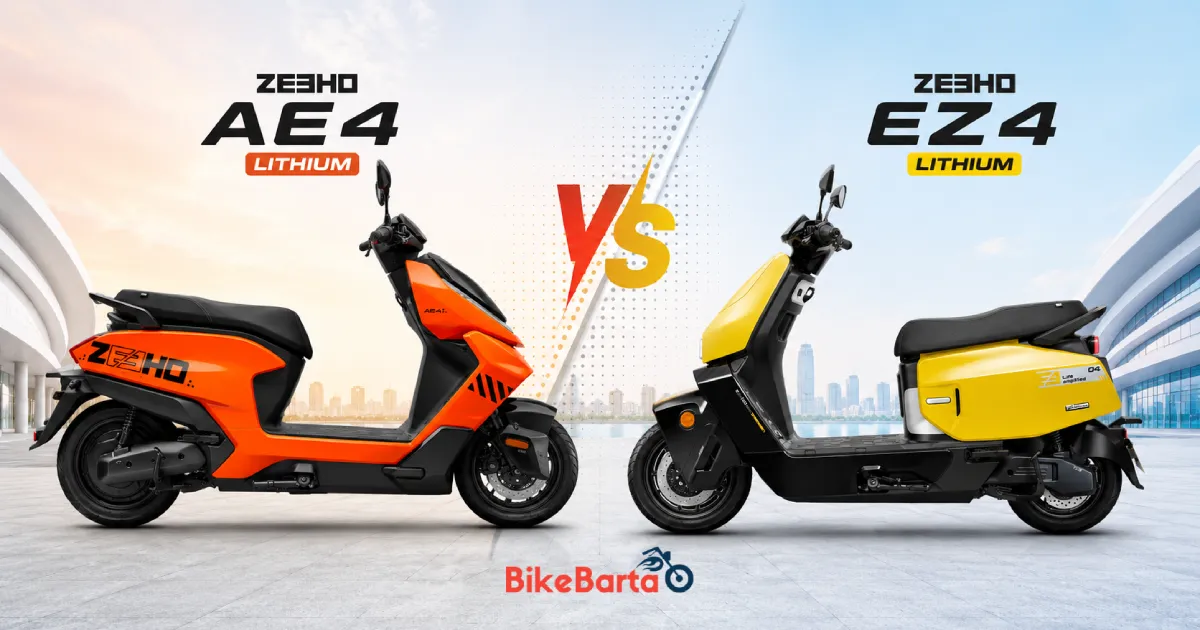
The Zeeho AE4 can be considered alongside other models in the brand’s wider electric scooter range. The Zeeho EZ3 offers a different scooter format for buyers comparing models within the brand. The Zeeho EZ4 is another related ZEEHO scooter with a different size, performance and battery configuration. Buyers seeking a more premium-oriented ZEEHO model can also consider the Zeeho AE8 SE, while the Zeeho AE7 provides another alternative within the company’s broader electric scooter lineup.
The AE4 itself is particularly notable because the two local variants offer a clear choice between a lower-cost Graphene Lead-acid configuration and a lighter, higher-priced Lithium configuration.
Zeeho AE4 Motor Power and Performance
The Zeeho AE4 uses a hub motor with 1.6 kW rated power and 3 kW peak power.
The Lithium variant has a claimed maximum speed of 65 km/h, while the Graphene variant has a claimed maximum speed of 45 km/h. This is a major performance difference between the two versions and should be considered carefully by buyers.
The Lithium version can accelerate from 0–50 km/h in no more than 8.8 seconds, while the Graphene version takes no more than 10.5 seconds under the supplied official specifications.
The official data also lists a 15° grade ability for the Lithium variant and 12° for the Graphene Lead-acid variant. This gives the Lithium version an advantage when dealing with steeper inclines, although actual climbing ability can vary according to rider weight, road surface, battery state of charge and riding conditions.
The official specification does not provide a confirmed peak torque figure for the Zeeho AE4. Therefore, a specific torque value should not be assigned to the model as an official specification.
The AE4 uses TCS traction control, which is designed to help manage wheel traction when the available motor output exceeds the grip available from the road surface.
The scooter also supports energy recovery, allowing the vehicle’s control system to recover energy during suitable deceleration conditions.
Zeeho AE4 Battery, Capacity and Battery Type
The Zeeho AE4 is available with two different battery technologies.
The Lithium variant uses a 74V 27Ah Lithium battery, while the Graphene variant uses a 72V 32Ah Graphene Lead-acid battery.
The Lithium battery has a nominal calculated energy capacity of approximately 2.0 kWh, based on the 74V and 27Ah rating. The Graphene battery has a nominal calculated energy capacity of approximately 2.3 kWh, based on its 72V and 32Ah rating.
These figures are calculated nominal battery-energy values and should not be confused with the exact amount of electricity drawn from the wall during charging.
The most obvious practical difference between the two battery configurations is reflected in the scooter’s overall weight. The Lithium version has a 96 kg curb weight, while the Graphene version weighs 133 kg.
The official supplied information does not confirm whether the batteries are user-removable, their exact IP ratings, cycle life, battery management system details or exact battery weight. These specifications should therefore not be assumed from other ZEEHO models or from general battery technology standards.
For Bangladeshi buyers, the battery choice should therefore be considered alongside the purchase price, vehicle weight, performance, braking system and long-term replacement cost.
Zeeho AE4 Range: Claimed Range Versus Real-World Use
The official range claim for both Zeeho AE4 variants is 63 km under the WMTC test cycle.
This is a controlled test-condition range figure and should not be interpreted as a guaranteed real-world distance in every riding situation.
A separately verified Bangladesh-tested city range, highway range or pillion range is not available in the supplied official specification. Therefore, those figures should not be presented as confirmed real-world measurements.
Actual range can vary depending on riding speed, rider and passenger weight, road gradients, traffic conditions, acceleration, tyre pressure, weather and the battery’s state of charge.
For a Bangladeshi rider, the most practical approach is to treat the 63 km WMTC claim as a reference figure, not as a guaranteed daily riding distance. Riders should leave a reasonable reserve for traffic, detours, road gradients and changes in riding conditions.
The fact that both variants have the same official WMTC range claim does not mean they will necessarily deliver identical real-world results in every situation. The two versions use different battery technologies and have a substantial difference in curb weight.
Zeeho AE4 Charging Time and Charging Practicality
The supplied official specification does not confirm the exact charging time, charger output or fast-charging capability of the Zeeho AE4.
The exact charging method and charging equipment should therefore be confirmed with the Bangladesh seller or distributor for the specific variant before purchase.
Home charging practicality is an important consideration for both versions. Buyers should have a safe and suitable place to park the scooter near an appropriate electrical connection.
Apartment residents and riders who park away from home should pay particular attention to the actual battery-removal arrangement. The supplied official information does not confirm whether the Lithium or Graphene battery can be conveniently removed and carried elsewhere for charging.
The AE4 should therefore not be purchased on the assumption that either battery can be easily carried upstairs or charged separately unless the actual local vehicle and its documentation confirm that arrangement.
Because the official charging time is not available, buyers should also avoid planning daily travel around an assumed overnight charging duration until the supplied charger and charging procedure are confirmed.
Zeeho AE4 Running Cost in Bangladesh
The Zeeho AE4’s running cost depends on the battery variant, electricity tariff and actual riding conditions.
Based on the nominal battery capacities and estimated charging losses, the estimated electricity cost per full charge is approximately ৳25–৳30 for the Lithium variant and ৳30–৳35 for the Graphene variant.
Using the official 63 km WMTC range claim as a reference, the estimated electricity cost works out to approximately ৳0.40–৳0.48 per kilometre for the Lithium version and ৳0.48–৳0.56 per kilometre for the Graphene version.
These are estimates rather than verified real-world running costs. Actual consumption can vary according to charging efficiency, electricity tariff, riding style and the distance achieved in real-world use.
At approximately 500 km per month, the estimated electricity-only running cost is around ৳200–৳240 per month for the Lithium variant and ৳240–৳280 per month for the Graphene variant.
The AE4 uses an electric powertrain and therefore does not require petrol or conventional internal-combustion engine servicing. However, it is not maintenance-free. Tyres, brakes, suspension components, bearings, electrical systems and other mechanical parts still require inspection and maintenance.
The estimated regular maintenance cost is approximately ৳2,000–৳4,000 per year, excluding major repairs, accident damage and battery replacement.
Zeeho AE4 Battery Replacement and Long-Term Ownership
Battery replacement is an important consideration for any electric scooter.
The estimated replacement interval for the Lithium variant is approximately 5–8 years, while the Graphene Lead-acid variant is estimated at approximately 3–5 years. These are general ownership estimates and are not official ZEEHO battery-life guarantees.
The estimated battery replacement cost is approximately ৳60,000–৳90,000 for the Lithium battery and ৳35,000–৳55,000 for the Graphene Lead-acid battery.
The actual replacement price can vary according to the battery supplier, market availability, specification and future pricing.
The higher initial price of the Lithium variant should therefore be considered together with its lower vehicle weight and different long-term battery characteristics. The lower purchase price of the Graphene version may be attractive to buyers with a tighter budget, but the battery technology and estimated replacement timeline are different.
Zeeho AE4 Design, Colours and Road Presence
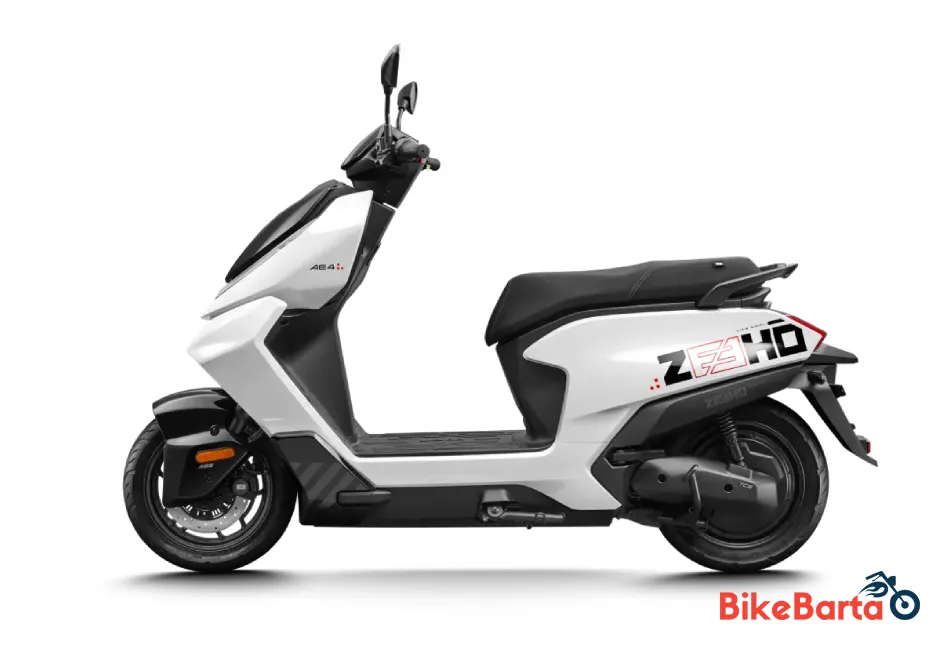
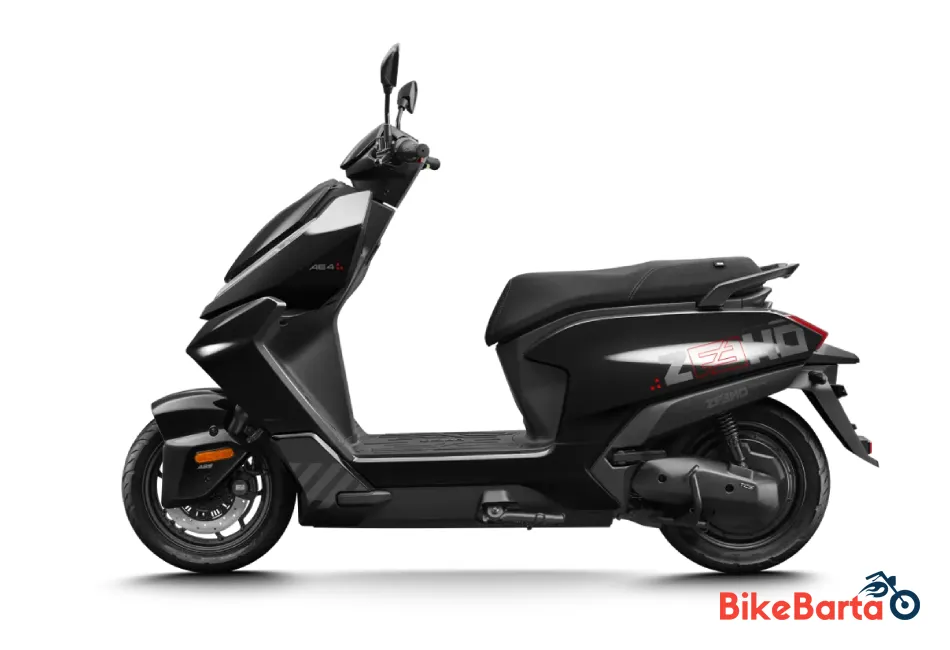
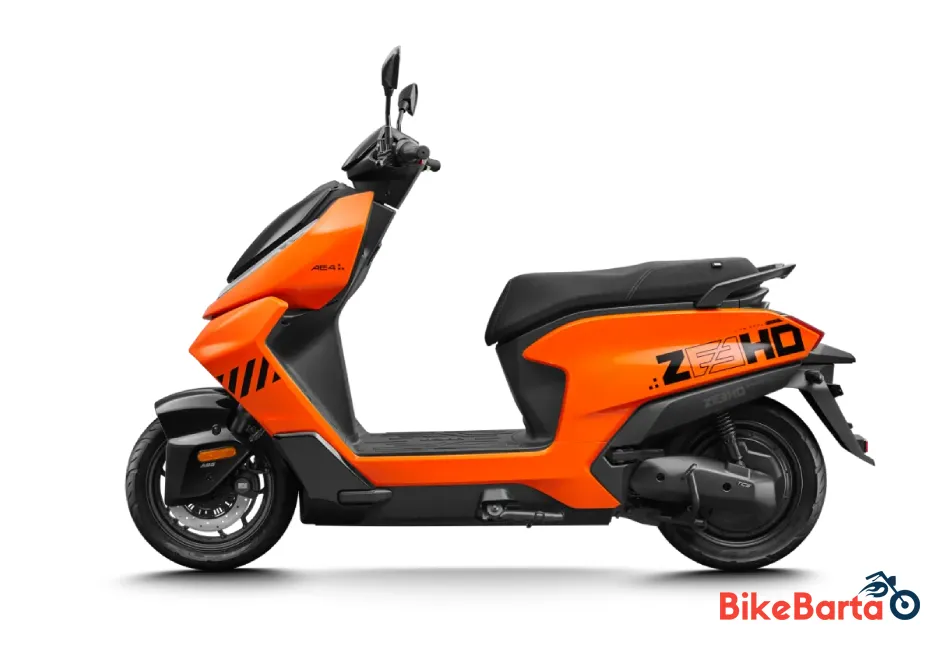
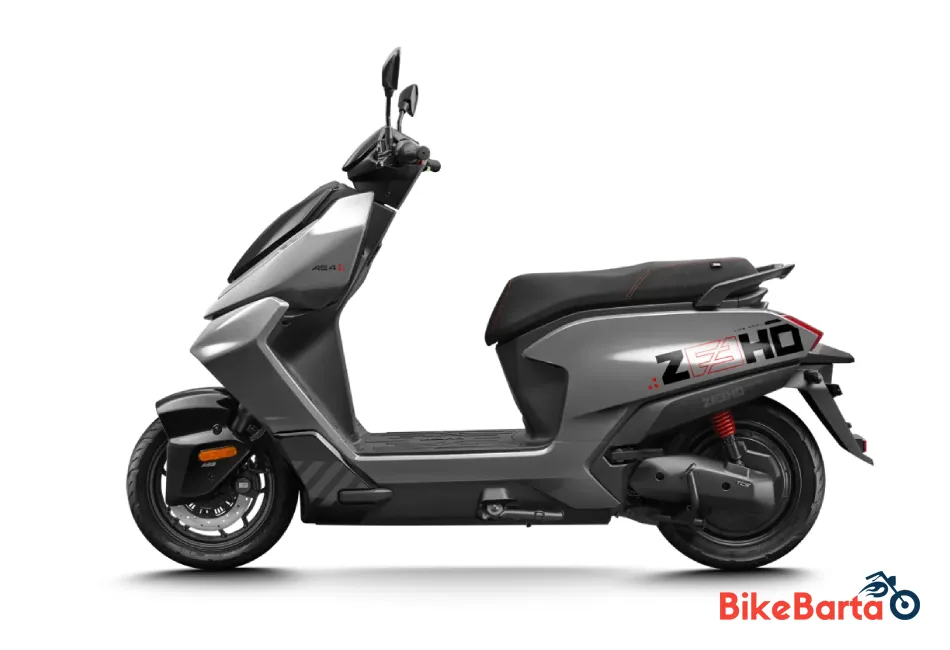
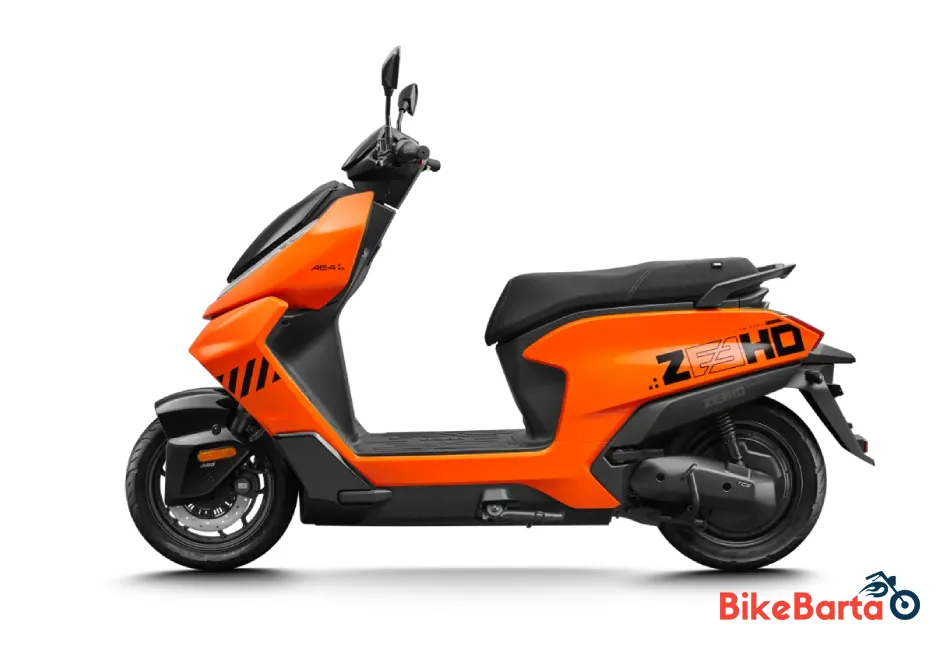
The Zeeho AE4 has a full-size electric scooter design with a relatively long body and modern styling.
Its dimensions are 1910 mm in length, 743 mm in width and 1154 mm in height. The 1340 mm wheelbase contributes to its substantial road presence and full-size scooter proportions.
The AE4 is available in Nebula White, Nebula Black, Helios Orange and Velocity Gray.
The scooter’s design is intended to combine everyday urban practicality with a more substantial road presence than a compact low-speed electric scooter. The full-size body also provides a platform for its suspension, braking and electronic equipment.
The two battery variants share the same basic dimensions, but their different curb weights create an important distinction in overall riding character. The 96 kg Lithium version is significantly lighter than the 133 kg Graphene version.
Zeeho AE4 Riding Position and Dimensions
The Zeeho AE4 has a 760 mm seat height, placing it within a conventional full-size scooter riding position.
Its 130 mm ground clearance is relevant for Bangladeshi riding conditions, where speed breakers, uneven road surfaces and broken transitions are common.
The 1340 mm wheelbase gives the scooter substantial proportions, while the 1910 mm overall length contributes to its full-size layout.
The 37 kg weight difference between the variants is particularly important in everyday use. The 96 kg Lithium version should be easier to manoeuvre in tight parking spaces and at low speeds than the 133 kg Graphene version, although actual handling also depends on rider technique and battery state.
The official supplied information does not confirm a maximum payload capacity, so a specific official load limit should not be added without further documentation.
Zeeho AE4 Suspension and Ride Comfort
The Zeeho AE4 uses a hydraulic front suspension and an adjustable twin-shock rear suspension with spring dampers.
The adjustable rear suspension allows the setup to be adapted to different riding conditions and loads. This can be useful for a scooter that may be used for solo commuting as well as occasional passenger riding.
The 130 mm ground clearance is helpful for dealing with ordinary urban road imperfections, although large or sharply angled speed breakers still require careful riding.
The Lithium version’s substantially lower curb weight may also make it feel more manageable during low-speed manoeuvres, while the heavier Graphene version has a different overall weight balance.
Zeeho AE4 Brakes and Tyres
The Zeeho AE4 uses a 220 mm front disc brake with an opposed two-piston caliper and a 190 mm rear disc brake with an opposed two-piston caliper.
The braking system differs between the two variants. The Lithium variant has ABS, while the Graphene Lead-acid variant uses a non-ABS configuration.
Both variants use TCS traction control.
The official tyre sizes are 80/90-12 at the front and 100/80-12 at the rear.
The supplied official information does not confirm the tyre brand or recommended tyre pressure. For database purposes, estimated tyre pressures of approximately 29 psi front and 32 psi rear for solo riding, increasing to approximately 32 psi front and 36 psi rear with a pillion, may be used as estimates only. The actual recommended pressure should be taken from the owner’s manual, tyre-pressure label or local distributor.
Zeeho AE4 Features and Electronics
The Zeeho AE4 includes a range of electronic and connected features.
The scooter supports ZEEHO RIDE, OTA updates, energy recovery, cruise control and anti-theft protection.
The supplied information also lists an Easy Ride! function, although the exact operation and feature details should be confirmed through the local vehicle documentation.
The official specification includes a headlight, position light, tail light, turn signals and brake light.
The exact display type and size, USB charging capability, GPS tracking functionality, Bluetooth features and detailed mobile-app functions are not confirmed in the supplied specification. Those details should therefore not be presented as confirmed equipment unless verified for the Bangladesh-market unit.
Zeeho AE4 Storage and Everyday Practicality
The supplied official information does not confirm the exact under-seat storage capacity of the Zeeho AE4.
Therefore, a specific storage volume should not be presented as an official specification.
The full-size scooter design should provide practical space for everyday use, but buyers who specifically need to carry a helmet, charger or other large items should inspect the actual storage compartment before purchase.
The scooter’s overall dimensions and full-size layout make it more suitable for daily urban mobility than a minimalist electric two-wheeler with very limited bodywork. However, the exact storage arrangement should be confirmed before purchase.
Zeeho AE4 Safety and Comfort
The Zeeho AE4’s safety equipment differs between its two variants.
The Lithium version receives ABS, while the Graphene version uses non-ABS braking. Both versions use TCS traction control.
Both also use front and rear disc brakes with opposed two-piston calipers, providing a more substantial braking hardware specification than many basic electric scooters.
The adjustable twin-shock rear suspension allows the setup to be adjusted according to riding conditions and load.
The 760 mm seat height and full-size scooter layout provide a conventional riding position, while the different curb weights of the two variants should be considered when evaluating low-speed handling and parking practicality.
Zeeho AE4 in Bangladesh City Riding
The Zeeho AE4 is primarily designed for urban and suburban mobility.
Its automatic electric drivetrain makes it suitable for stop-and-go traffic, while the Lithium version’s 65 km/h claimed top speed provides greater speed capability than the Graphene version’s 45 km/h claim.
The 130 mm ground clearance is useful for common urban road conditions, although speed breakers and damaged road surfaces still require care.
The Lithium version’s 96 kg curb weight can be an advantage in crowded urban environments where riders frequently need to manoeuvre, reverse or park in tight spaces. The Graphene version weighs 133 kg, making it substantially heavier.
For city riders, the choice between the two versions is therefore not simply a matter of battery chemistry. It also involves a significant difference in vehicle weight, performance and braking equipment.
Zeeho AE4 for Longer Rides
The Zeeho AE4 can be used for longer urban and suburban journeys, but riders should plan around the official range claim and actual charging arrangements.
Both variants have an official 63 km WMTC range claim, but a verified real-world range figure is not available in the supplied information.
The Lithium version offers stronger performance, a higher claimed top speed and ABS, which may make it more attractive to riders who regularly travel on faster urban or suburban roads.
The Graphene version has a lower claimed top speed and heavier overall weight, making it more naturally suited to buyers prioritising a lower purchase price.
For longer journeys, riders should avoid planning trips around the assumption that the scooter will always achieve the full 63 km WMTC figure in real traffic.
Zeeho AE4 Charging Practicality in Bangladesh
Charging access is one of the most important ownership considerations for the Zeeho AE4.
The exact charging time, charger output and fast-charging capability are not confirmed in the supplied official information. Buyers should therefore confirm the actual charging equipment and procedure for the specific variant.
Home charging may be convenient for owners with secure parking and access to a suitable electrical connection. However, apartment residents and people who park their scooters away from home should verify the battery-removal arrangement before purchase.
The supplied information does not confirm that the Lithium or Graphene battery is designed for convenient daily removal. Therefore, buyers should not assume that the battery can simply be carried indoors for charging.
The most suitable ownership environment is one where the scooter can be parked safely near an appropriate charging connection, subject to the actual charging instructions supplied with the vehicle.
Zeeho AE4 Maintenance and Battery Considerations
The Zeeho AE4 uses an electric powertrain, so its maintenance requirements differ from those of petrol-powered vehicles.
It does not require conventional internal-combustion powertrain servicing. However, regular inspection of tyres, brakes, suspension components, bearings, electrical connections and other mechanical parts remains necessary.
The two battery variants also require different long-term ownership considerations.
The Lithium variant is considerably lighter and offers stronger performance specifications, while the Graphene Lead-acid variant has a lower purchase price but a substantially higher curb weight.
The exact battery warranty, motor warranty, controller warranty, charger warranty and service coverage were not provided in the supplied information. These details should be confirmed with the Bangladesh distributor before purchase.
Zeeho AE4 Advantages
The Zeeho AE4 offers a useful choice between two distinct battery variants.
The Lithium variant provides 3 kW peak power, a 65 km/h claimed top speed, 15° grade ability, 0–50 km/h acceleration in no more than 8.8 seconds and ABS braking. Its 96 kg curb weight is also a major advantage for riders who prioritise easier manoeuvrability.
The Graphene variant offers a significantly lower purchase price of ৳155,000, while still using the same 1.6 kW rated and 3 kW peak motor and carrying the same official 63 km WMTC range claim.
Both variants offer TCS traction control, energy recovery, cruise control, anti-theft protection, OTA support and ZEEHO RIDE connectivity.
The full-size dimensions, adjustable rear suspension and substantial disc brakes also give the AE4 a more developed specification than a basic low-speed electric scooter.
Zeeho AE4 Disadvantages
The most significant disadvantage of the Graphene version is its 133 kg curb weight, which is 37 kg heavier than the Lithium variant.
The Graphene version also has a lower claimed top speed of 45 km/h, slower acceleration and a non-ABS braking system.
The Lithium version addresses many of these limitations but costs ৳218,500, making it significantly more expensive than the Graphene version.
The official range claim is based on the WMTC test cycle, and a separately verified Bangladesh real-world range figure is not available.
The exact charging time, battery-removal arrangement, charger output, battery IP rating, battery cycle life and warranty terms are also not confirmed in the supplied information.
Zeeho AE4 Competitors in Bangladesh
The Zeeho AE4 competes with several electric scooters and two-wheelers available in Bangladesh, although the comparison depends heavily on which AE4 variant is being considered.
The Yadea GT25, priced at ৳135,000, is a lower-cost alternative to the Graphene AE4. Its listed specification includes a 1.2 kW hub motor, a 72V 23Ah Graphene battery, a 54 km/h maximum speed and an 80–90 km stated range. It offers a lower purchase price and a different range-focused specification, while the AE4 Graphene provides a larger 3 kW peak-power figure, TCS and a full-size specification.
The Yadea T5, listed at ৳139,000, is another lower-priced electric scooter option. Its listed specification includes an 800W motor, while the model is positioned as an urban electric scooter. It is therefore a more affordable alternative for buyers whose priority is everyday city commuting rather than the stronger performance specification of the AE4.
The Walton Takyon 1.00 26Ah is listed at ৳129,500 and uses a 1.2 kW hub motor with a 72V 26Ah Graphene Lead-acid battery. Walton lists a 50 km/h top speed and 70–80 km Eco-mode range, making it a lower-priced range-focused alternative to the AE4 Graphene.
The Walton Takyon Fusion 25RS is listed at ৳144,550, placing it close to the Graphene AE4 in price. Walton lists a 60 km/h top speed, 100–110 km Eco-mode range and a 72V 38Ah Graphene battery. Its larger battery specification makes it particularly relevant to buyers who prioritise claimed range and battery capacity over the AE4’s electronic and braking equipment.
The Walton Takyon 1.00 38Ah is listed at ৳159,999, putting it close to the Graphene AE4’s price but well below the Lithium AE4. It may appeal to buyers seeking a larger battery configuration within Walton’s range.
These models are not direct replacements for both AE4 variants. The Graphene AE4 competes more directly on purchase price, while the Lithium AE4 occupies a significantly higher budget position and offers a lighter vehicle, higher claimed top speed and ABS.
Is the Zeeho AE4 Suitable for Bangladesh?
The Zeeho AE4 can be a suitable option for Bangladeshi riders who primarily travel in urban and suburban areas and have reliable access to charging.
The Graphene variant is more accessible from a purchase-price perspective at ৳155,000. Its 3 kW peak motor, TCS, adjustable rear suspension and full-size scooter design make it more substantial than a basic low-speed electric scooter, although its 133 kg weight, 45 km/h claimed top speed and non-ABS braking should be considered.
The Lithium variant, priced at ৳218,500, offers a significantly different specification. Its 96 kg curb weight, 65 km/h claimed top speed, 15° grade ability, faster acceleration and ABS make it the more performance-oriented version.
For Bangladesh’s traffic and road conditions, the 130 mm ground clearance is useful for regular urban riding, although riders should still take care around large speed breakers and damaged road surfaces.
Charging access remains essential. Before buying, customers should confirm the charging procedure, battery-removal arrangement, warranty terms and local after-sales support for the exact variant.
Frequently Asked Questions About the Zeeho AE4
What is the Zeeho AE4 Price in Bangladesh?
The Zeeho AE4 price in Bangladesh is ৳155,000 for the Graphene variant and ৳218,500 for the Lithium variant.
How many battery variants does the Zeeho AE4 have?
The Zeeho AE4 is available with a Lithium battery variant and a Graphene Lead-acid battery variant.
What is the motor power of the Zeeho AE4?
The Zeeho AE4 uses a 1.6 kW rated hub motor with 3 kW peak power.
What is the top speed of the Zeeho AE4?
The Lithium variant has a claimed top speed of 65 km/h, while the Graphene variant has a claimed top speed of 45 km/h.
What is the claimed range of the Zeeho AE4?
Both variants have an official 63 km WMTC range claim.
Is the Zeeho AE4 real-world range verified?
A separately verified Bangladesh real-world range figure is not available in the supplied information. The official 63 km WMTC figure should therefore be treated as the model’s claimed test-cycle range.
What type of battery does the Zeeho AE4 use?
The Lithium version uses a 74V 27Ah Lithium battery, while the Graphene version uses a 72V 32Ah Graphene Lead-acid battery.
Which Zeeho AE4 variant is lighter?
The Lithium variant weighs 96 kg, while the Graphene variant weighs 133 kg.
Does the Zeeho AE4 have ABS?
Yes, the Lithium variant has ABS. The Graphene Lead-acid variant uses a non-ABS braking configuration.
Does the Zeeho AE4 have traction control?
Yes. Both variants use TCS traction control.
Does the Zeeho AE4 have energy recovery?
Yes. The official specification lists Energy Recovery for the Zeeho AE4.
Does the Zeeho AE4 have cruise control?
Yes. Cruise Control is included in the supplied official equipment specification.
Does the Zeeho AE4 have an app?
Yes. The scooter supports ZEEHO RIDE connectivity.
Does the Zeeho AE4 support OTA updates?
Yes. OTA support is listed in the official equipment information.
What brakes does the Zeeho AE4 use?
The scooter has a 220 mm front disc brake with an opposed two-piston caliper and a 190 mm rear disc brake with an opposed two-piston caliper.
What are the Zeeho AE4 tyre sizes?
The official tyre sizes are 80/90-12 at the front and 100/80-12 at the rear.
What is the Zeeho AE4 seat height?
The seat height is 760 mm.
What is the ground clearance of the Zeeho AE4?
The ground clearance is 130 mm.
What is the curb weight of the Zeeho AE4?
The Lithium version weighs 96 kg, while the Graphene version weighs 133 kg.
What is the Zeeho AE4 battery capacity?
The Lithium version uses a 74V 27Ah battery, while the Graphene version uses a 72V 32Ah battery.
What is the Zeeho AE4 acceleration?
The Lithium version accelerates from 0–50 km/h in no more than 8.8 seconds, while the Graphene version takes no more than 10.5 seconds.
Which Zeeho AE4 variant has better hill-climbing ability?
The Lithium variant has a specified 15° grade ability, while the Graphene variant has 12° grade ability.
What colours are available for the Zeeho AE4?
The Zeeho AE4 is available in Nebula White, Nebula Black, Helios Orange and Velocity Gray.
What is the estimated running cost of the Zeeho AE4?
Based on estimated electricity costs, the Lithium version may cost approximately ৳0.40–৳0.48 per kilometre, while the Graphene version may cost approximately ৳0.48–৳0.56 per kilometre. These are estimates, not verified real-world consumption figures.
What is the estimated Zeeho AE4 battery replacement cost?
The estimated replacement cost is approximately ৳60,000–৳90,000 for the Lithium battery and ৳35,000–৳55,000 for the Graphene Lead-acid battery. Actual replacement prices may vary.
Final Verdict
The Zeeho AE4 is an electric scooter with two substantially different battery variants for the Bangladesh market.
The Graphene variant costs ৳155,000 and offers a 1.6 kW rated motor, 3 kW peak power, 45 km/h claimed top speed, 63 km WMTC range claim and a 72V 32Ah Graphene Lead-acid battery. It is the more affordable option, but its 133 kg curb weight, slower acceleration and non-ABS braking distinguish it from the Lithium version.
The Lithium variant costs ৳218,500 and offers a 96 kg curb weight, 65 km/h claimed top speed, 15° grade ability, acceleration from 0–50 km/h in no more than 8.8 seconds and ABS. It is the more performance-oriented and lightweight configuration.
Both variants share the same basic full-size scooter platform, including 3 kW peak power, 63 km WMTC range claim, TCS traction control, energy recovery, cruise control, anti-theft protection, OTA support and ZEEHO RIDE connectivity.
For a Bangladeshi buyer, the main decision is therefore between a lower purchase price and a lighter, faster, more advanced braking configuration. The Graphene version is more budget-oriented, while the Lithium version offers a stronger overall performance specification.
The Zeeho AE4 price in Bangladesh should ultimately be evaluated alongside charging access, long-term battery cost, after-sales support, warranty coverage and the exact local specification of the selected variant. For buyers who have reliable charging access and primarily travel in urban or suburban areas, the AE4 provides a clear choice between two different electric scooter ownership experiences rather than simply two battery options.